
A roofer's guide to hanging holiday lights with clips instead of nails, what to leave in the toolbox, and what to check when the lights come down in January.
Columbus homeowners start stringing lights in November, and the roof edge is where a lot of people reach for a hammer or a staple gun. If you want to hang holiday lights without damaging your roof, the plan is simple: attach everything to the gutter or the edge with clips, and leave the shingles alone. Here is the roofer's view, from a roofing contractor in Columbus. You will get a layout that clips on, a list of what to avoid, and a short check for when the lights come down.
Why Nails and Staples Are the Problem
A nail or staple driven through a shingle, or into the roof edge, leaves a hole. On a dry day in November it looks like nothing. Over a Columbus winter, with snow, ice and the rain that follows, that hole is a path for water.
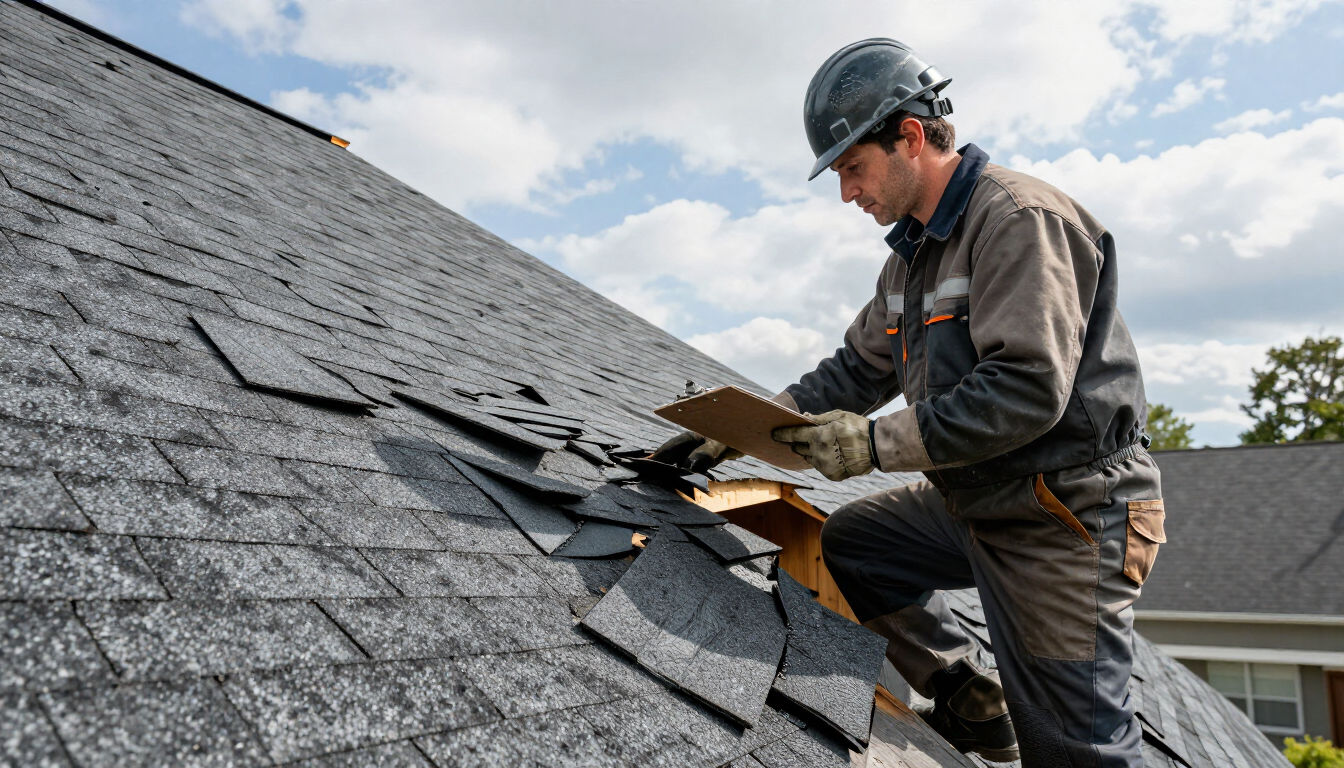
Roof damage from nails is easy to cause and hard to spot. The hole sits under a strand of lights all season. Nobody sees it until a stain shows up on a ceiling.
Allstate Exteriors builds roofs to hold up against rain, wind, snow or hail. A roof can only do that if the shingles and the roof edge stay intact.
How to Hang Holiday Lights Without Damaging Your Roof
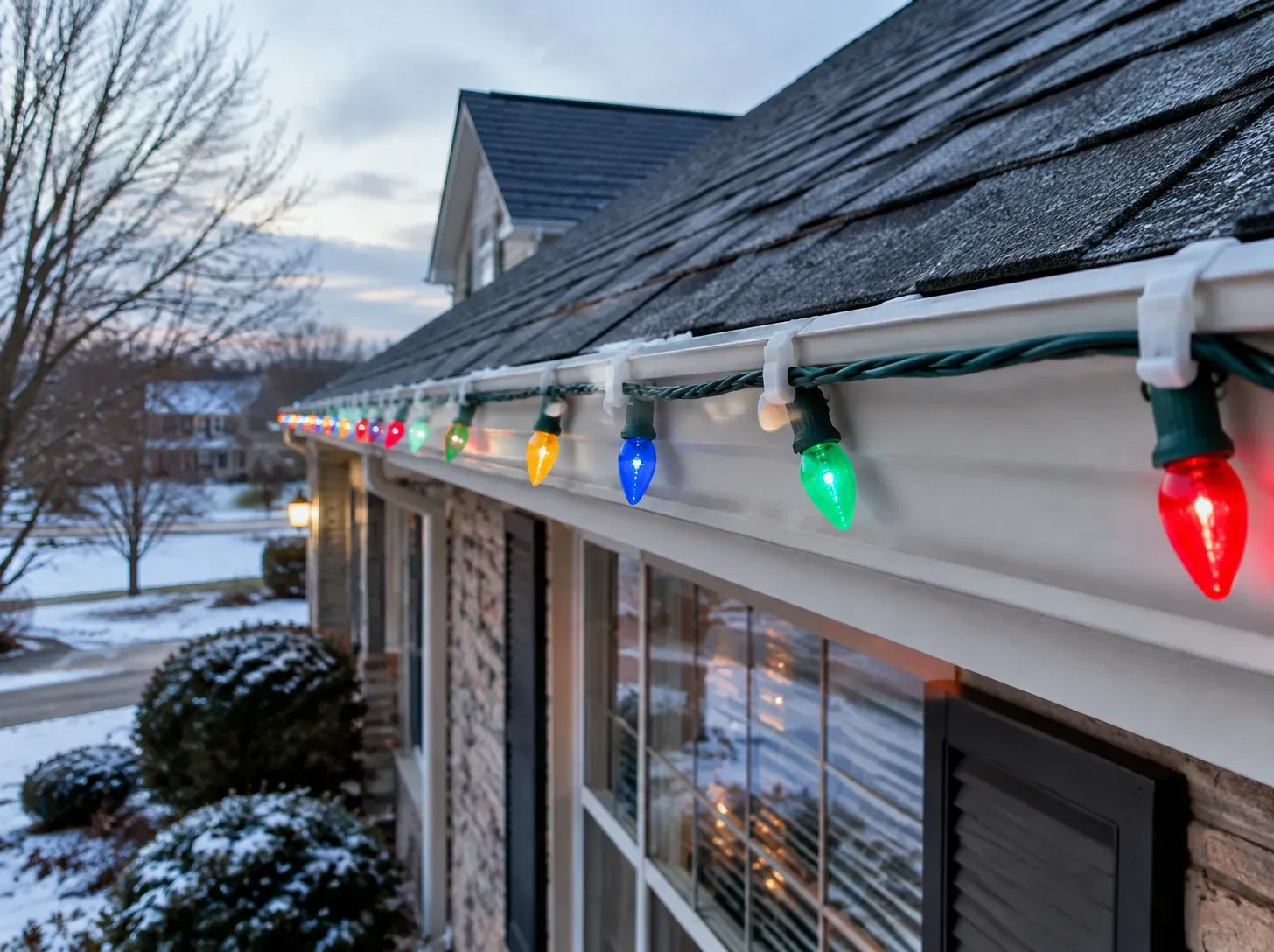
Clip the lights to the gutter or the edge, and never fasten anything through a shingle. Use clips made for the job, keep every strand off the shingle surface, and plan the layout from the ground before anyone climbs a ladder.
That one rule covers most of the problem. The rest is planning, good clips and patience.
Plan the Layout From the Ground
Walk the yard and look at the house. Decide where the lights will run before you buy a single strand.
- Follow the lines you already have. The gutter line and the edge of the roof give you a natural path for a strand.
- Mark the power source. Pick an outlet and plan strands so the cords reach without being pulled tight.
- Count what you need. Measure the runs you plan to light so you are not tempted to improvise at the top of a ladder.
- Keep it modest at the high points. The peak and the steep sections are the hardest places to light safely. Skip them if you cannot reach them from a stable ladder.
A layout that is planned from the ground also keeps you from wandering onto the roof. Do not walk on the roof to hang lights. It is a fall risk, and the roof is not a work platform.
Use Gutter Clips and Christmas Light Clips
Gutter clips and Christmas light clips are the tools that replace nails. Gutter clips grip the gutter lip. Other Christmas light clips are made to hold a strand along an edge. Both let you run lights along the house without a single fastener going into the roof.
A few habits make clips work better:
- Read the package. Each clip is made for certain places, such as a gutter or an edge. Use it where the package says it belongs.
- Check the gutter first. A clip is only as secure as what it grips. If a section of gutter is loose or bent, fix that before you hang anything on it.
- Space the clips evenly. Even spacing keeps a strand from sagging, which keeps it from pulling on a single clip.
- Let the strand rest. Lights should hang from the clips, not pull against them.
If you are not sure whether your gutters can hold a strand, a Columbus roof repair visit can sort that out before the season starts.
What to Leave in the Toolbox
Some shortcuts cost more than they save. Leave these out of the plan:
- Nails. Each one is a hole for water.
- Staples. A staple gun is quick, and the holes it leaves are just as real.
- Screws. Another fastener through the shingle, and another hole.
- Lifting shingles. Do not bend or lift shingle tabs to tuck a strand underneath, especially in cold weather. Shingle tabs can crack when bent in the cold.
If a strand will not stay put without one of these, the layout is wrong. Move the strand or drop it.
Ladder Safety, and When to Call a Pro
Keep ladder rules simple and stick to them:
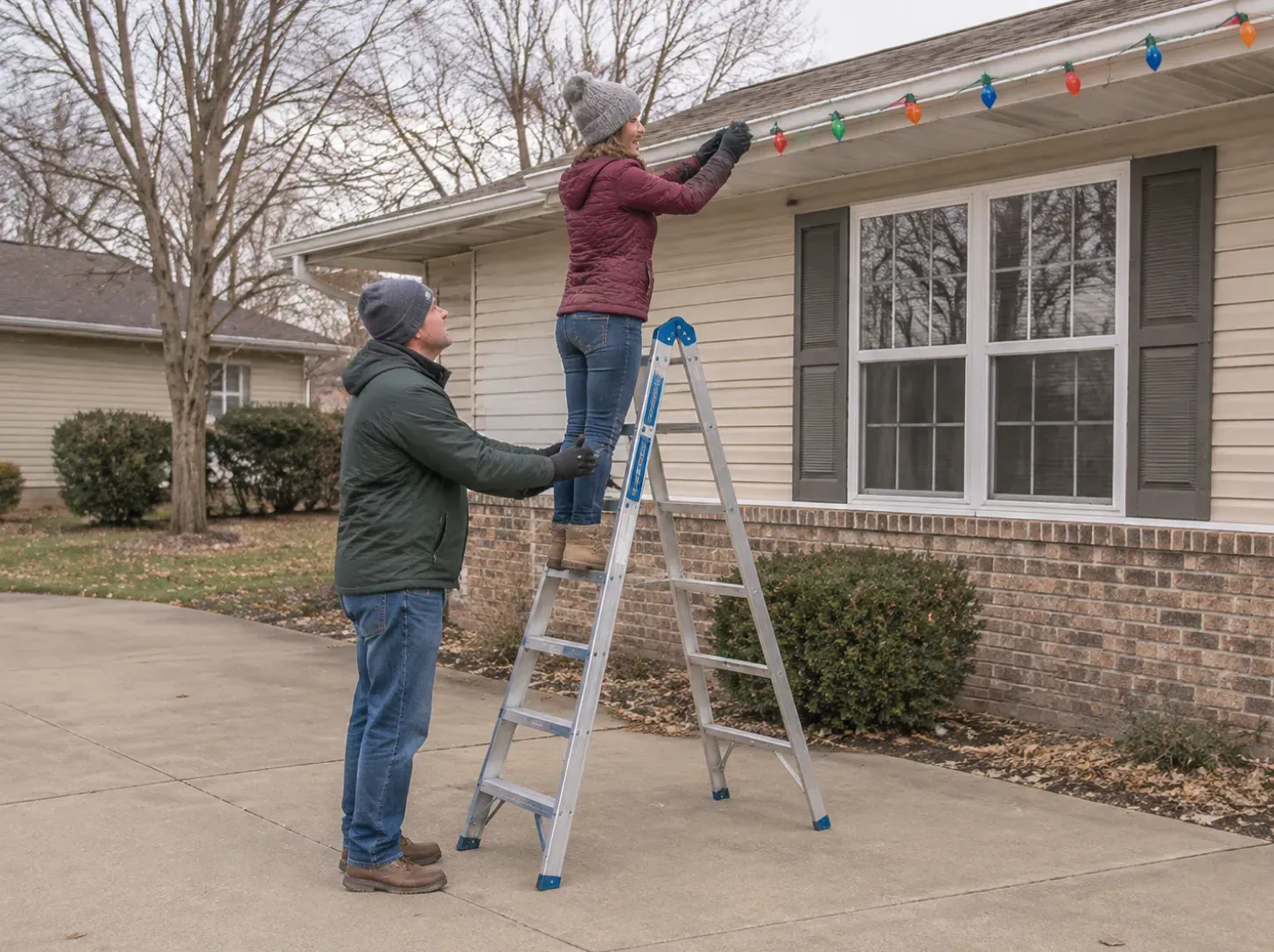
- Set the ladder on firm, level footing.
- Have a helper hold it and hand you lights.
- Stay off the ladder when it is wet or icy, and do not work from the roof.
Anything above a first-story eave is a job for a professional. A second-story edge or a steep section is not worth the risk for a string of lights. A pro has the equipment for it, and you keep your feet on the ground.
What to Check When the Lights Come Down in January
Taking the lights down is the second half of the job. Take the clips off slowly and look at what they were holding.
From the ground, with binoculars if you have them, look for:
- Shingles near the roof edge that look lifted, cracked or missing.
- Dark or wet marks under where a strand ran.
- Gutter sections that sag or have pulled away from the house.
- Any spot where a nail or staple went in, if you or a previous owner used one.
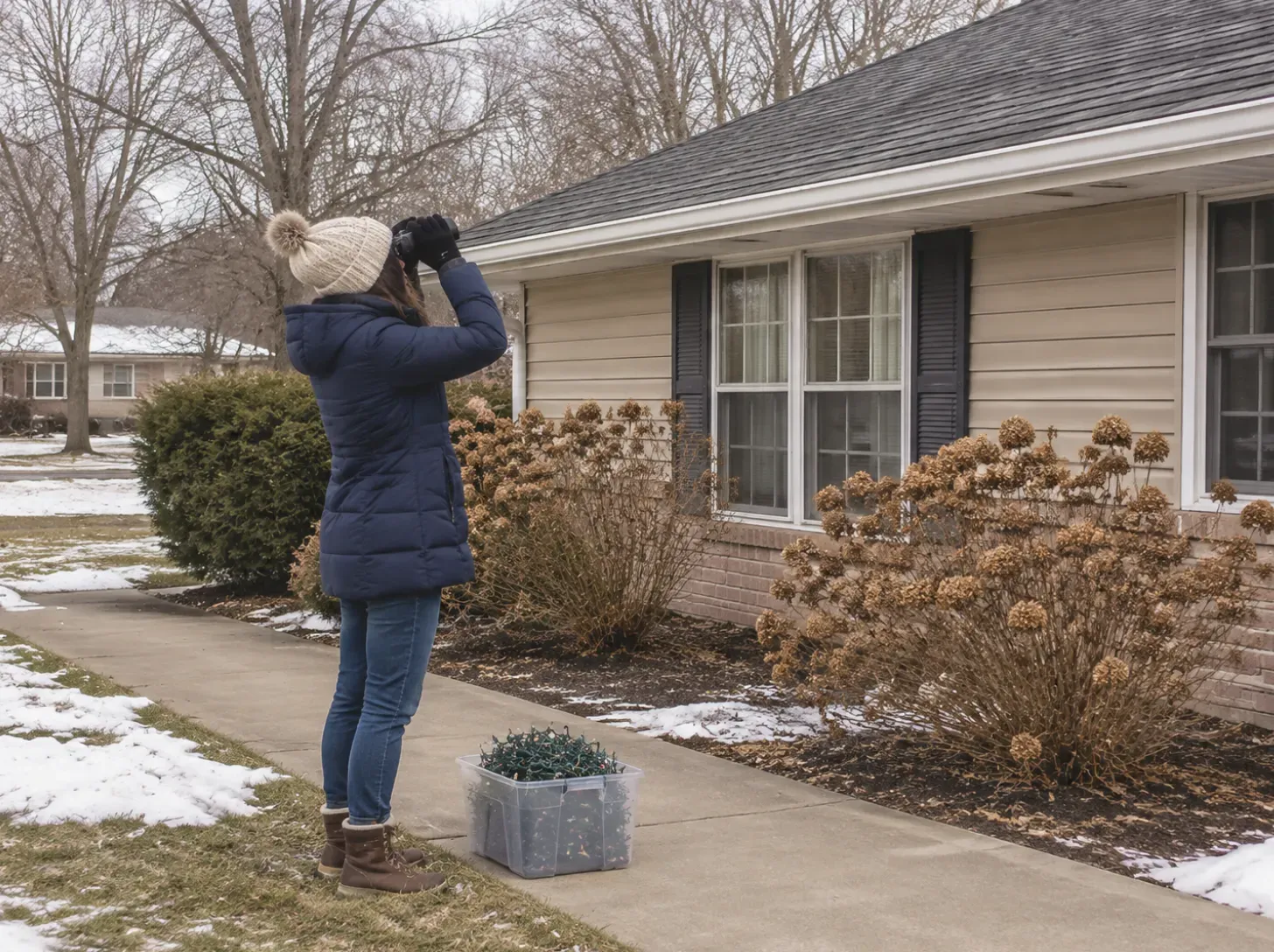
Inside the house, check the ceiling and the walls near the exterior for new stains. Stay off the roof while you do all of this. If you see anything that worries you, take photos from the ground and call for an inspection.
This is a light-specific check, not a full seasonal list. For the rest of the season, see the post on preparing your roof for winter in Columbus, Ohio.
Frequently Asked Questions
Can you hang holiday lights without damaging your roof?
Yes. Clip the lights to the gutter or the roof edge with clips made for that, and never drive a nail, staple or screw through a shingle. Plan the layout from the ground, use a stable ladder with a helper, and stay off the roof.
Do I need special clips, or will any clip work?
Use clips made for the spot you are lighting, such as a gutter or an edge. Read the package to see where each clip is meant to attach. If the clip does not fit the spot, pick a different clip rather than forcing it.
What if I already used nails or staples on the roof edge?
Do not pull on them from the roof. Note where they are from the ground and have a roofer look at the spot. A free estimate from Allstate Exteriors includes a complimentary roof inspection.
Should I hang the lights myself?
You can handle a first-story eave with a stable ladder and a helper. Anything higher, or any steep section, is better left to a professional.
What should I look for after the lights come down?
Check the shingles and the roof edge from the ground for anything lifted, cracked or missing. Look for wet marks under where a strand ran, and check the gutters. Inside, look at ceilings near exterior walls for new stains.
Conclusion
Lights should hang from clips, not from holes. Plan the layout from the ground, use gutter clips and Christmas light clips, keep every fastener out of the shingles, and check the roof edge in January. A few careful minutes now can save a repair later.
Next Step
Allstate Exteriors has served Ohio and Florida homeowners since 2002 as a family-run business, and is an Owens Corning Platinum Preferred Contractor.
"We highly recommend Allstate Exteriors!!"
Amy E.
If you want a roofer to look at your roof edge before or after the lights go up, get a free estimate from the Columbus office at 2691 E Main Street, Columbus, OH 43209, or call 877-816-7663.