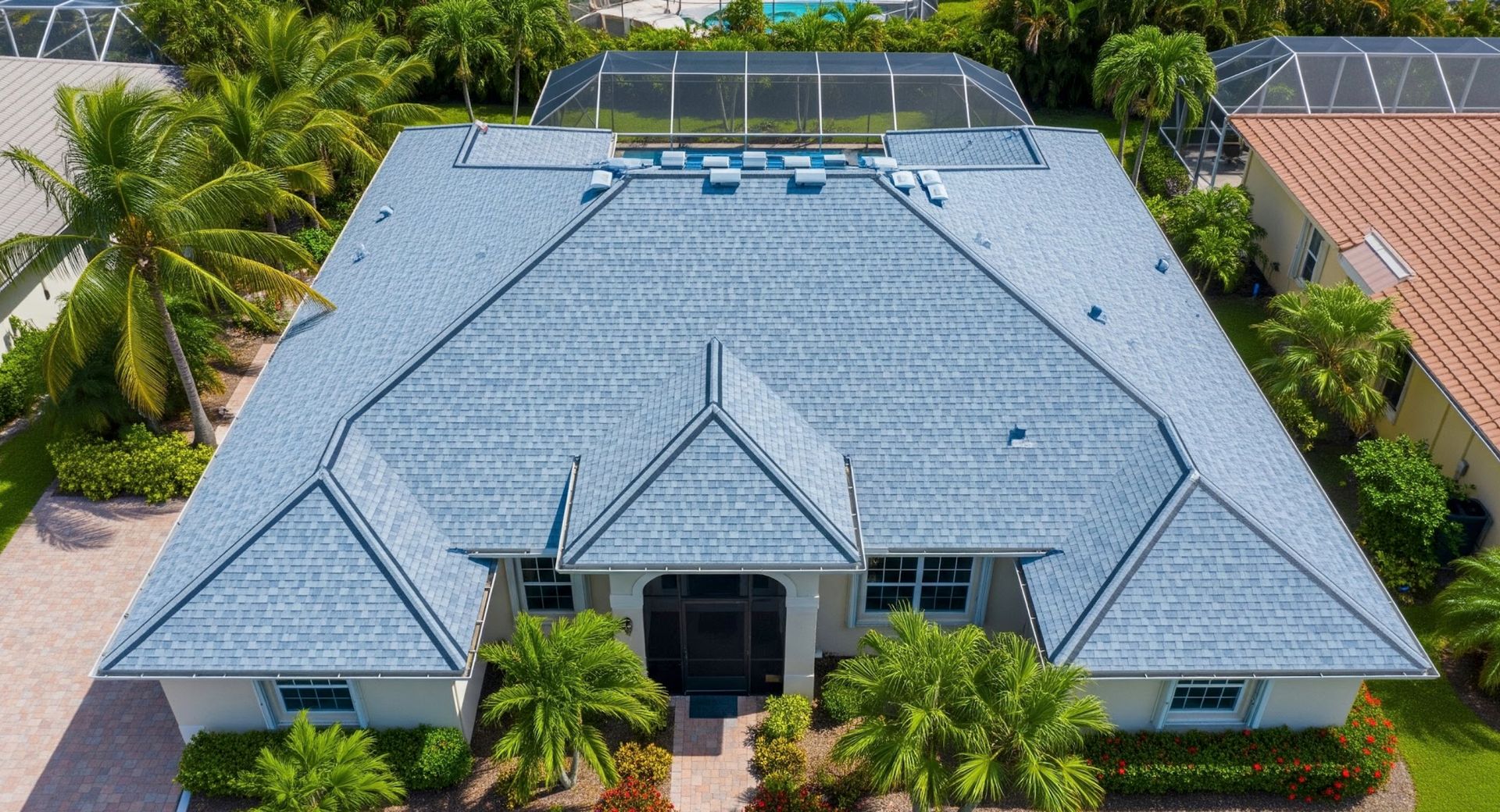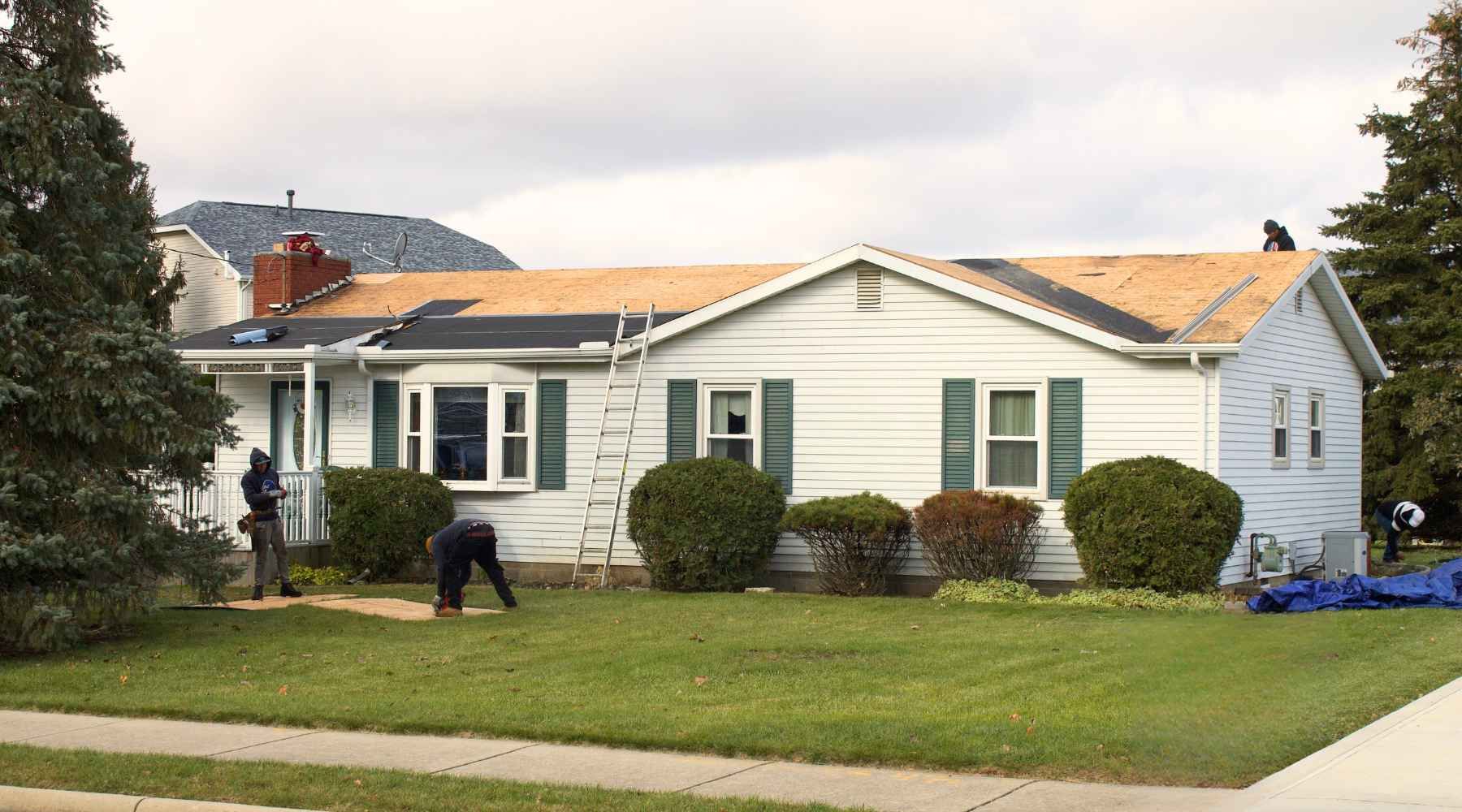

A source-backed guide to Cape Coral tile roof underlayment, built around water-shedding roof design, wind-driven rain, inspection limits, and repair vs. replacement decisions
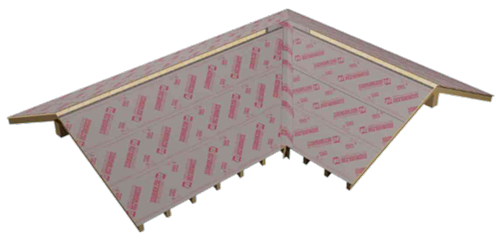
A Cape Coral tile roof can look healthy from the street while the underlayment below needs attention. Tile sheds most rain, but the underlayment helps protect the roof deck when wind-driven rain gets beneath tile edges. Leaks with no visible broken tile, repeated repairs in the same area, and attic moisture after tropical weather are signs the hidden layer deserves a closer inspection.
Tile Sheds Water; Underlayment Protects the Deck
Clay and concrete tile are durable roof coverings, which is why many Cape Coral homeowners trust them for a long service life. The important detail is that a tile roof is a water-shedding assembly. The tile moves most rain down the slope, but it is not the only line of defense. Wind can push rain beneath tile laps, especially during tropical weather. The underlayment below the tile is the barrier that helps protect the deck when water gets past the surface.
That hidden layer is why a tile roof inspection cannot stop at counting cracked tiles from the driveway. A roof can have very few visible tile defects and still have a leak path at a valley, penetration, wall transition, or exposed underlayment area. The visible tile matters. The concealed layer often decides whether the home stays dry.
Cape Coral Roofs Face Heat, Wind-Driven Rain, and Complex Edges
Cape Coral roof systems live under strong sun, humid air, heavy rain, and tropical wind events. Those conditions do not affect every part of the roof evenly. Open roof fields may look clean while valleys, hips, vents, skylights, chimneys, sidewalls, and eaves age faster because water moves more aggressively through those details. It is the same reason hurricane-ready roofing materials are judged on the whole assembly rather than the surface alone.
The Florida Building Code includes underlayment requirements for concrete and clay tile roof assemblies. That code context matters because it confirms a basic point homeowners often miss: underlayment is not an optional accessory under tile. It is part of the roof assembly. The exact material and installation path should be verified against the applicable code, product approval, roof slope, and local permitting requirements for the property.
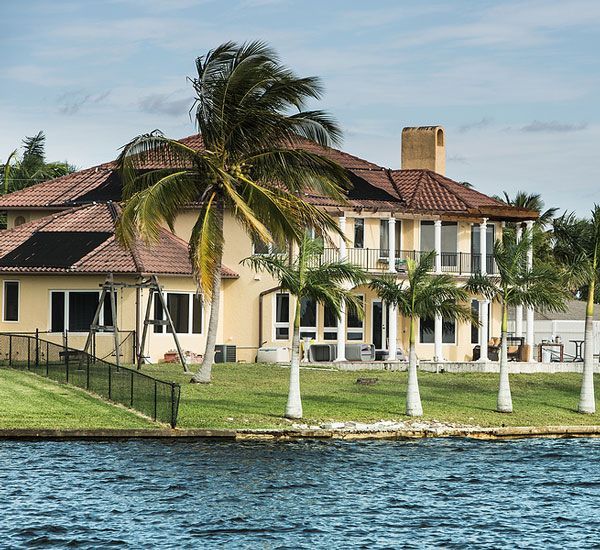
The Most Common Clues Are Indirect
| Clue | What It May Mean | Best Next Step |
|---|---|---|
| Leak with no missing tile | Water may be entering at a valley, penetration, wall tie-in, or underlayment defect | Inspect the roof detail rather than replacing random tiles |
| Same repair area keeps leaking | The visible tile repair may not have addressed the hidden layer | Review underlayment, flashing, and nearby decking |
| Stain after wind-driven rain | Water may be pushed under the tile during stronger weather | Check slope exposure and transition details |
| Broken or slipped tile | Underlayment may have been exposed to sun or direct water | Lift selected tile if safe and appropriate during inspection |
The pattern matters more than any single symptom. One cracked tile near a branch strike can be a focused repair. Several unrelated stains across different roof sections point toward a broader inspection conversation.
A Real Inspection Looks Beneath Selected Tiles
A proper tile roof inspection uses judgment. It does not mean tearing apart the roof. It does mean the inspector may need to lift selected tiles, check valleys and penetrations, look for brittle or torn underlayment, inspect flashing, and look for moisture clues in the decking or attic. Without that closer view, the inspection can describe the surface but may miss the layer that is doing the waterproofing work. The same logic applies to hurricane clips, nails, and fasteners: the components you cannot see from the ground often carry the load.
Homeowners should ask how the inspection will evaluate the concealed layer. If a contractor gives a firm underlayment opinion without seeing below tile where needed, ask what evidence supports the conclusion. A clear answer should point to photos, lifted-tile findings, leak location, roof age documentation, permit history, or observed material condition.
Repairable Problems and System Problems Are Different
A small, isolated leak at one vent or one broken tile can often be handled as a repair if the surrounding roof assembly is sound. A pattern of unrelated leaks, brittle underlayment across more than one area, or repeated patching that never holds belongs in a broader roof-scope discussion that may include residential roof replacement.
| Repair May Fit | Broader Scope May Fit |
|---|---|
| One isolated broken or slipped tile with sound material below | Multiple leak points across unrelated roof areas |
| One flashing or vent detail causing a clear leak path | Widespread brittle, torn, or poorly bonded underlayment |
| Nearby tiles and deck test dry during inspection | Past repairs have not stopped the same leak pattern |
| No active moisture beyond the focused area | Decking, attic, or interior evidence shows a larger water path |
Questions to Ask Before Tile Roof Work Starts
Bring these five to the estimate conversation, in this order:
These questions keep the conversation grounded. The right decision comes from the inspection findings, not from the tile's appearance alone.
Not Sure What's Under Your Tile?
Get the concealed layer documented before small repairs start piling up.
A Cape Coral Inspection Should Respect the Weather
Tile roofs are common in Southwest Florida because they fit the climate, architecture, and homeowner expectations. Still, the roof below the tile needs the same seriousness as the tile itself. If a Cape Coral home has recurring stains, lifted tile, storm exposure, or leak symptoms after wind-driven rain, the underlayment deserves a documented inspection before small repairs pile up.
Frequently Asked Questions
Can tile roof underlayment fail while the tile still looks good?
Yes. Tile can keep its appearance while underlayment, flashing, or transition details below it age or become damaged.
Can a tile roof leak without broken tile?
Yes. Valleys, vents, wall tie-ins, fasteners, and underlayment defects can leak even when the field tile looks intact from the ground.
Should all Cape Coral tile leaks mean full roof replacement?
No. Some are focused repair issues. The decision should come from inspection findings, leak pattern, underlayment condition, and the condition of nearby roof details.
What should I ask for in a tile roof inspection?
Ask for photos, lifted-tile findings where appropriate, underlayment observations, flashing notes, moisture clues, and a clear explanation of repair versus replacement reasoning.
Get a Documented Look Below the Tile
The tile is what you see. The underlayment is what keeps the deck dry. As a Cape Coral, FL roofing contractor serving Southwest Florida, Allstate Exteriors inspects the concealed layer along with the surface, documents what it finds, and explains repair versus replacement in plain terms.