
What a fall check of a commercial flat roof covers, from strainers and ponding water to scuppers and downspouts, and when to bring in a pro.
Dayton property owners and facility managers have a short window in the fall to look at their commercial flat roof drains before winter arrives. A drain, scupper or downspout clogged with leaves and grit holds water on a flat roof, and that water freezes and thaws all winter. This guide comes from a roofing contractor in Dayton. It covers what a fall roof drain inspection checks, the signs of ponding water on a flat roof, and why drains belong in your regular commercial roof maintenance.
Before winter, check every drain, scupper and downspout on a flat roof. Clear debris from the strainers, look for ponding water, check the membrane around each drain, and make sure scuppers and downspouts are open. Keep staff off the roof without proper fall protection and roof access, and have a professional do the inspection when you are unsure.
Why Commercial Flat Roof Drains Matter Before Winter
Commercial flat roof drains carry rain and melting snow off a roof that has little or no slope. When a drain is blocked, the water has nowhere to go and sits on the roof surface. In winter that standing water freezes, thaws and freezes again, which puts steady strain on the roof around the drain.
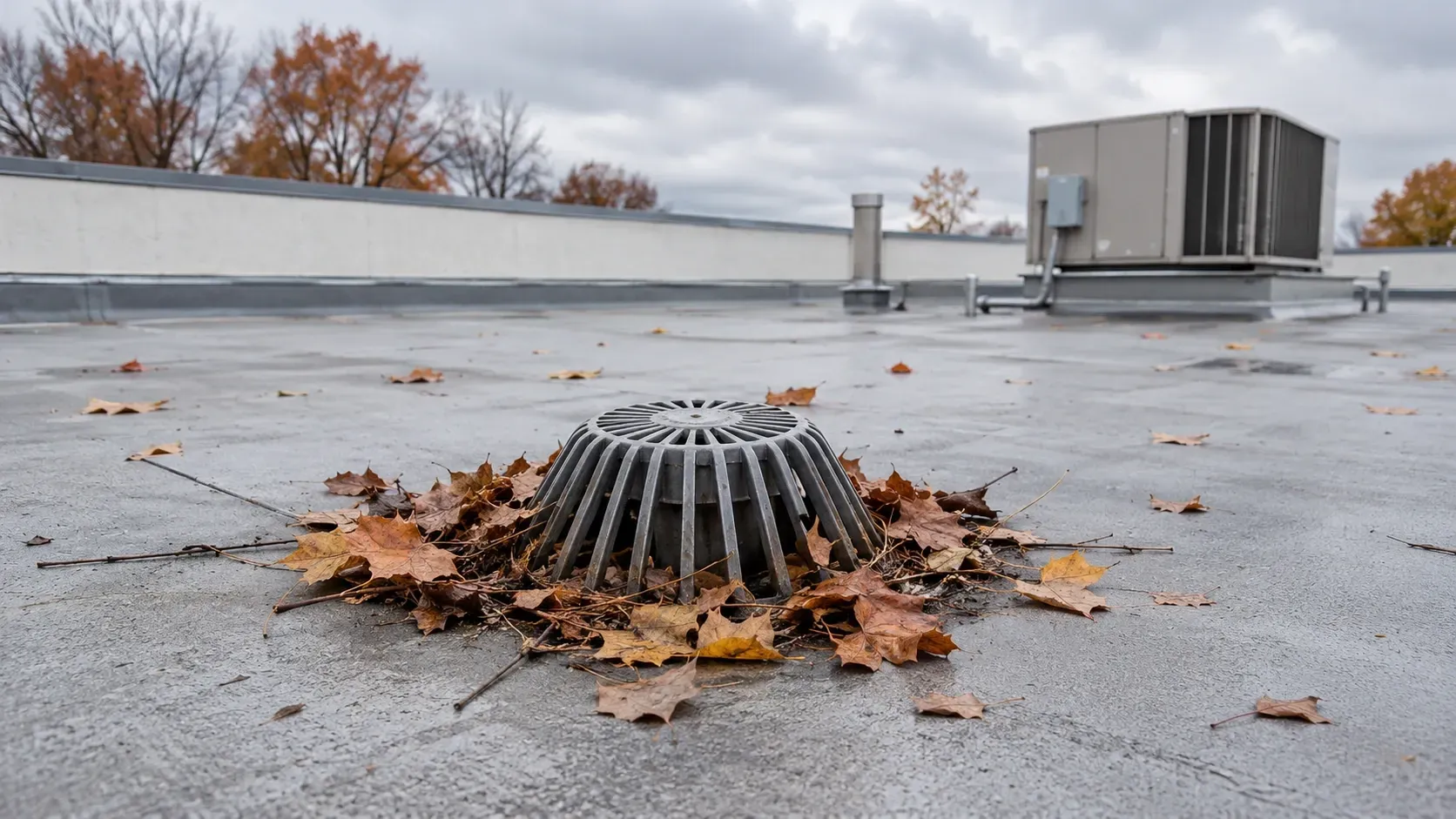
A flat roof depends on its drains, scuppers and downspouts to move water off the building. Every one of them can clog. Fall is when leaves, grit and loose debris collect on a roof, so fall is also when the drains are most likely to be partly or fully blocked.
The cost of waiting is simple. A blocked drain you find in November is a short job. The same drain found in February, after weeks of freezing and thawing, may come with a leak and a ceiling stain to explain to a tenant.
What a Fall Roof Drain Inspection Covers
A good fall roof drain inspection looks at the whole path water takes, from the roof surface to the ground. Here are the parts to check.
Strainers and Debris
Each drain has a strainer or dome that keeps debris out of the pipe. Look for leaves, grit, branches and trash packed against it or inside it. Check that the strainer is in place and not cracked or missing. A drain with no strainer is easy to clog from the inside.
Signs of Ponding Water
Ponding water on a flat roof is water that stays around a drain or in a low spot long after the rain has stopped. Look for these signs:
- Standing water or a wet patch near a drain after a storm has passed.
- A ring of dirt or a discolored stain where water sat and dried.
- Debris collected in a low spot, which hints that water gathers there.
- Algae or moss growing on the roof surface.
If you cannot see the roof, watch for the same story from below. A new ceiling stain under a drain is a sign to call for help.
The Membrane Around the Drain
The roofing membrane and its seals around each drain take the most abuse, because all the water on that section of the roof heads there. Look for cracks, blisters, lifted edges, loose seams and pulled-back sealant. Take photos from where you can safely stand. Do not patch the membrane yourself; leave repairs to a roofer.
Scuppers and Downspouts
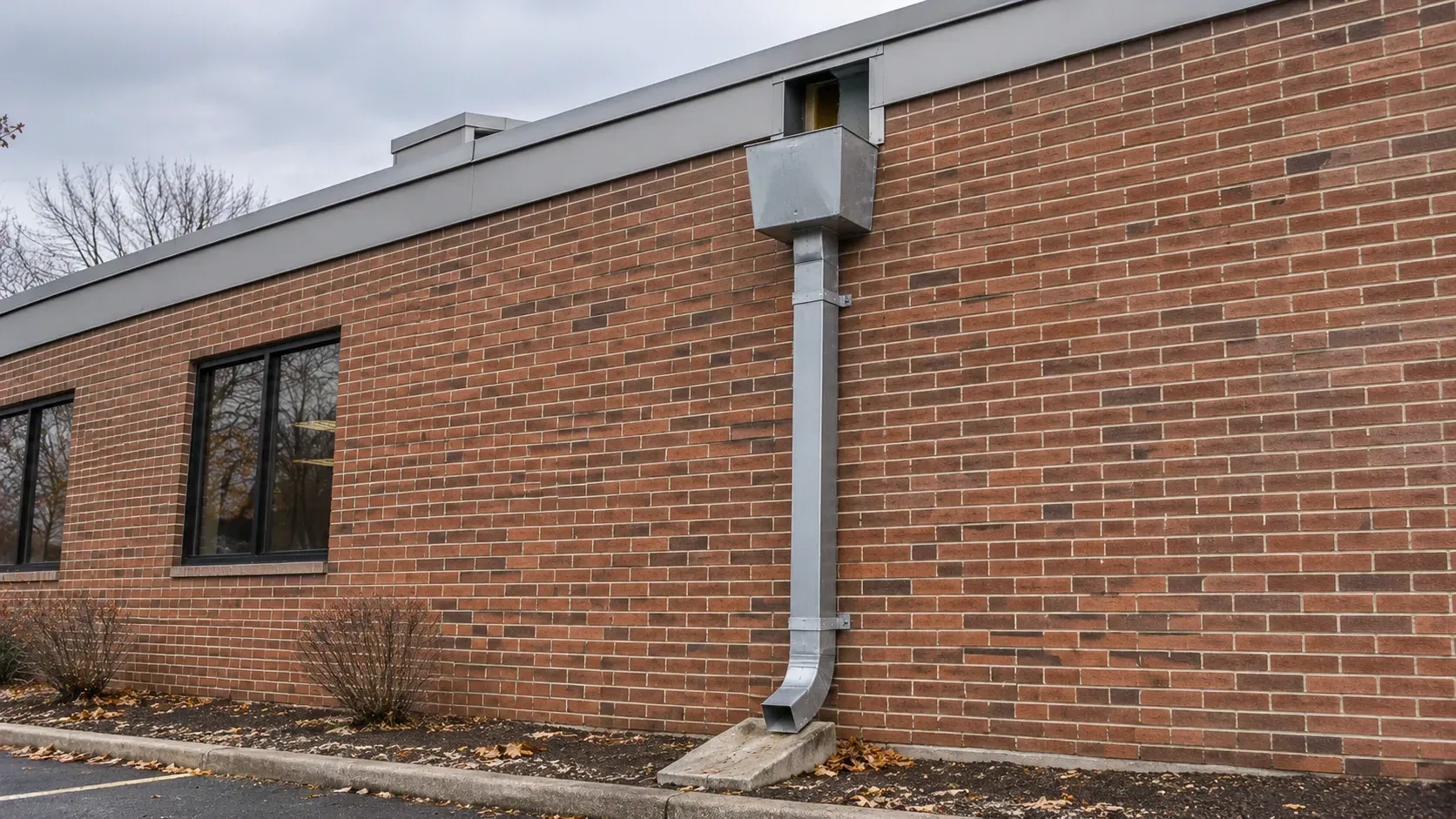
A scupper is an opening that lets water out through a wall at the roof edge. Check that each scupper is open and free of debris. Then check the downspouts: they should be clear, firmly attached and leading water away from the building. A downspout that is packed with debris backs water up onto the roof just like a blocked drain does.
Keep Staff Off the Roof Without Fall Protection
Do not send maintenance staff onto a roof without proper fall protection and roof access. A drain check is not worth an injury. If your building has no safe way onto the roof, or you are unsure, have a professional do the inspection.
There is still plenty you can do from the ground and from inside:
- Walk the building after a rain and look at the downspouts and the ground below them.
- Check ceilings and walls under drain locations for new stains.
- Look at the roof edge and scuppers from a safe spot on the ground.
- Write down what you see and when, so a roofer can start with your notes.
Not Sure It's Safe to Check the Roof?
Let a professional inspect your drains, scuppers and the membrane around them before winter.
Commercial Roof Maintenance in Dayton: Where Drains Fit
Drain checks are one part of commercial roof maintenance. The FAQ on the commercial roofing page recommends inspections "at least twice a year, typically in the spring and fall." The fall visit is the one that catches drains before winter. The spring visit shows what the winter did.
For Dayton commercial roofing, that rhythm keeps small problems small. A cleared strainer and a sealed seam cost far less than a wet ceiling in an occupied building. If you want a look at the roof systems themselves, read commercial roofing solutions for Beavercreek businesses.
Frequently Asked Questions
How do I know if my commercial flat roof drains are clogged?
Look for water that stays on the roof after the rain has stopped, debris packed against the strainer, and water spilling over at a scupper. Inside, a new ceiling stain under a drain is another sign. If you see any of these, schedule a professional inspection.
Can my maintenance staff clear the drains themselves?
Only if they can reach the roof with proper fall protection and roof access. If not, do not send them up. A roofer can clear the drains and look at the membrane around them in the same visit.
What should I do if I find standing water or a damaged drain?
Take photos from a safe spot, note the location and the date, and do not force or patch anything. Call a roofer to inspect the drain and the membrane around it. You can also request a free estimate and describe what you saw.
Is a fall inspection still worth it if the roof was checked in the spring?
Yes. A spring check shows what winter did. A fall check catches what has built up since, such as leaves and debris in drains. That is why the commercial roofing FAQ recommends both, in the spring and the fall.
How can Dayton property managers reach Allstate Exteriors?
The Dayton office is at 1506 Milburn Avenue, Dayton, OH 45404, and visits are by appointment only. Call 937-576-3443 to set one up.
Conclusion
A clogged drain, scupper or downspout turns a flat roof into a basin that freezes and thaws all winter. A fall check of the strainers, the debris, the signs of ponding water, the membrane around each drain, and the scuppers and downspouts costs little compared with a winter leak. Keep staff off the roof unless they have proper fall protection and roof access, and bring in a professional when you are unsure.
Next Step
Allstate Exteriors has served Ohio and Florida as a family-run business since 2002 and is an Owens Corning Platinum Preferred Contractor. The team includes Chad, Commercial Project Manager.
"They did a fantastic job on our church roof and repairs."
Vinnie W.
Want a roofer to look at your drains before winter? Get a free estimate or call the Dayton office at 937-576-3443.