
Roofing Material: Why It’s An Important Part Of Your Roof
Allstate Exteriors • April 4, 2022

What is a roofing material? You look up at your central Ohio home’s roof and perhaps you wonder: What’s it made of? No matter the type of roof you have, most of it came from the earth. Metal, tile, plastic, asphalt: they all have been mined or pumped from the earth. Your home’s roofing material has been shaped from raw resources into a water-resistant, modern product. That roofing material was expertly installed by trained roofers. 

Shingles

North America’s most popular residential roofing material is the shingle, which comes in two fabrications:

  1. Asphalt — flexible, water resistant, and economical; often very thick due to its relative lack of strength
  2. Fiberglass Asphalt — flexible, water resistant, available in a wide price range, and extremely strong thanks to glass fibers

Shingles are a type of unitized construction. Think of a brick wall; it is assembled by skilled masons one brick at a time. That means bricks can help form walls of any height and length. They can be shaped into serpentine walls or curved towers. Shingles work much the same way on your roof. Each is about three feet long and about a foot wide. A shingle can be installed in flawlessly aligned rows, or it can be curled around turrets and towers.

Only about half of each shingle is visible when properly installed. The lower half has three tabs, or sections, that look like separate leaves. They are covered in colored ceramic granules (in your color selection) embedded in a soft matrix of asphalt (refined from crude oil pumped out of the ground) and fiberglass threads. One shingle cannot do a whole heckuva lot. But combine one shingle with hundreds of identical shingles and your central Ohio home’s roof can be beautifully crowned with a water-resistant, 20-year-tough roof for a very reasonable cost.

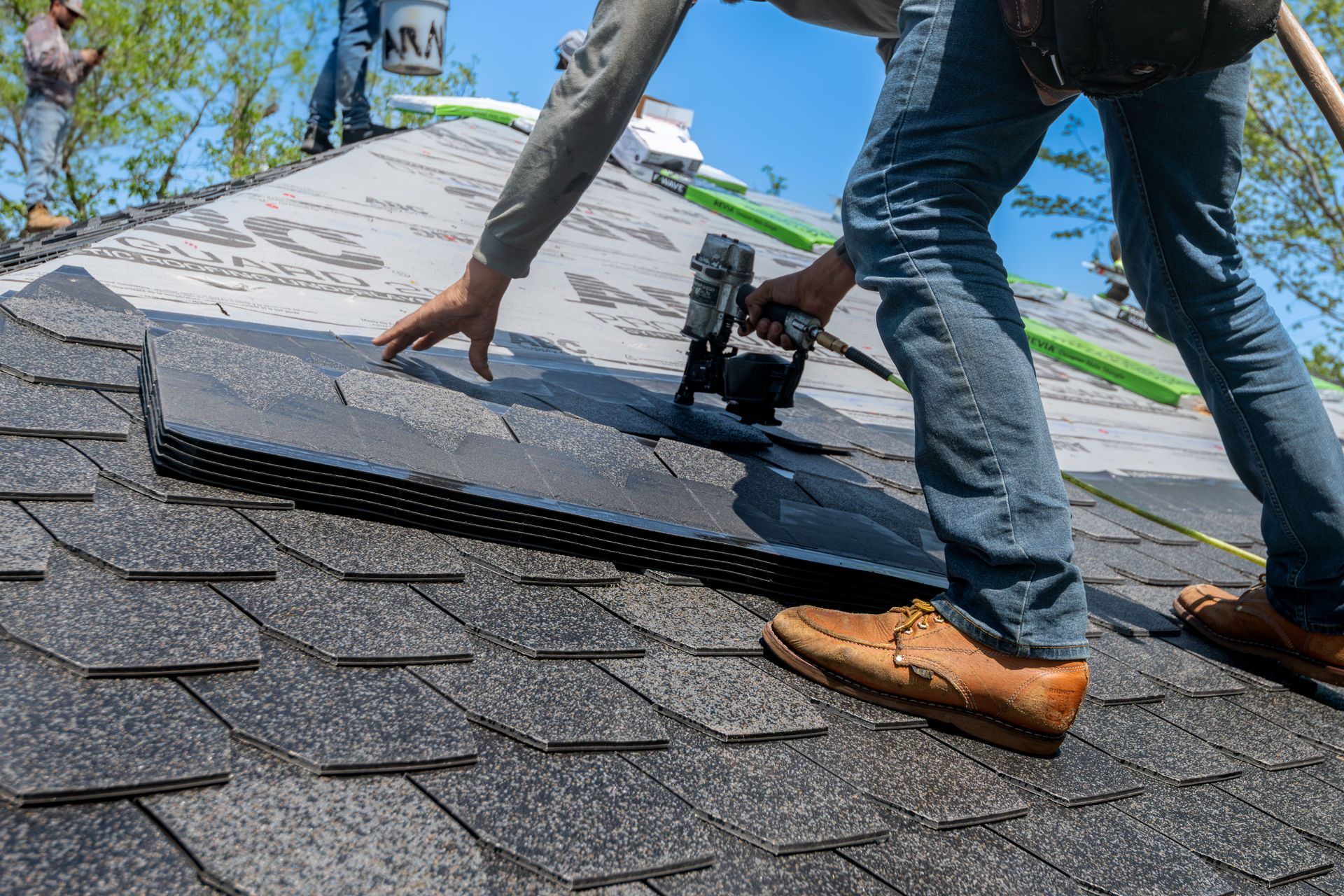
Shingles are installed from the bottom of your roof up toward the ridge line. They are put down right after the underlayment, water and ice shield, and drip edge are installed. The first row, starter shingles, have no colorful tabs. Starter shingles form a defensive line against water, snow, and ice along the eaves.

Then the decorative, colorful shingles are nailed down atop them, with every row staggered to avoid aligning any seams. Up, up, up your roof, quickly and expertly, shingles go down very fast in the hands of highly trained roofers. Those experienced roofers can interweave shingles into your roof’s valleys so you never see the metal flashing beneath, or they can allow the bright metal to shine through for a decorative touch.

Roofers wrap shingles around rooftop penetrations like chimneys, sanitary stacks, and vents. They make sure flashing and caulking provide waterproof seams. Your roofing contractor’s crew finishes the roof with ridge vents capped by more shingles. Shingle installation is one of the last steps in a full roof replacement. 

Metal Roofing

Metal roofing is available in many configurations:

  • Standing seam or vertical panel
  • Natural (native) materials such as copper
  • 5V crimp
  • Metal shingles
  • Metal shakes

Metal roofing is available in a broad range of colors, many of which provide enormous energy efficiencies thanks to metal’s natural reflectivity. You can cool your Ohio home for less money under a metal roof than under most shingle roofs. Your choice in a metal roof material plays a big role in your family’s comfort, future maintenance costs, and your energy bills:

  • Some metal roofing provides greater heat reflectivity in summer than other types, helping to keep your HVAC system operating at a minimum
  • Some metal roofing requires a bit more maintenance than other types , though all metal roofing is far less labor intensive than a properly maintained shingle roof
  • Some metal roofing is more energy efficient than other types (though all outstrip shingle roofing, significantly)

Assessing Your Existing Roofing Material

No conscientious roofer ever suggests that homeowners climb onto their homes’ roofs. Roofs are dangerous places, so stay off! Still, you may want to examine your central Ohio home’s roof from the ground. You are unlikely to be able to tell the difference between regular asphalt shingles and fiberglass-asphalt ones, but you can generally differentiate the asphalt-based product from a metal roof.

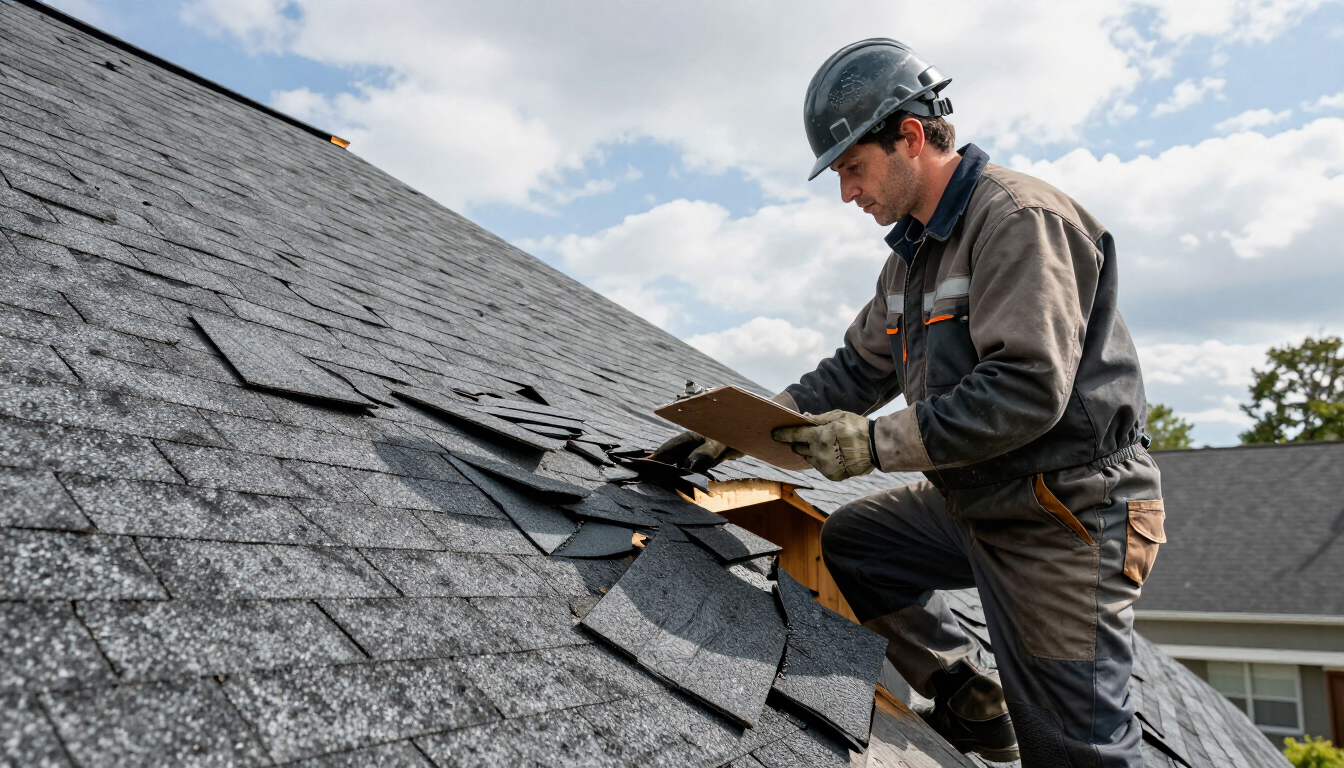
  • Cupped, curled, cracked, or missing shingles
  • Loose or corroded flashing

You cannot see the roofing material from inside your attic, but you can get a good idea of what you have up top by looking at what installers drove into your sheathing. If you see hundreds of nail points (be careful!), you have a shingle roof. Metal roofing usually installs on wood battens, so you may not see any screw tips through the sheathing. From Columbus to Dayton and throughout central Ohio, Allstate Exteriors & Restoration is your go-to roofer for all your roofing needs. Contact us today to learn more about roofing materials suitable for your home.
Blue two-story house with white trim, front porch, and green lawn under a bright sky
August 18, 2026
Storm damage can affect the roof, siding, and gutters at once. Learn the right repair order, when bundling makes sense, and what to verify first.
Three people review roofing estimates at a table with brochures, a laptop, and a coffee mug.
August 11, 2026
Prepare for a roof insurance adjuster meeting with the right photos, inspection report, claim details, questions, and follow-up steps.
Worker painting trim on a brick house exterior using a ladder
August 4, 2026
Learn what a strong roof inspection report includes, from photo evidence and condition notes to repair reasoning, insurance documentation, and estimate handoff.
Workers installing black shingles on a steep roof under a blue sky
July 28, 2026
Tile roofs in Cape Coral can look sound while underlayment problems develop below. Learn signs, inspection points, repair factors, and what to ask.
Worker repairing gray shingle roof with hammer on a house under a cloudy sky
July 21, 2026
A practical photo guide for Ohio homeowners after roof hail damage, including what to capture, how to organize it, and when to schedule an inspection.
April 29, 2026
When you live in a place as beautiful and storm prone as Cape Coral, FL , your roof isn’t just another part of the house. It’s your first and most vital line of defense against Florida’s blazing sun, high humidity, and hurricane season downpours. That’s why finding a dependable roofing contractor who knows the local weather, building codes, and roofing needs is more than just smart, it’s essential. Here at Allstate Exteriors , we’ve been proud to provide professional roofing in Cape Coral, FL , delivering high performance results to homeowners throughout neighborhoods like Pelican, Cape Harbour, Trafalgar, and Burnt Store. Our mission is simple: protect homes with expert craftsmanship, premium materials, and trustworthy service . Why Roofing in Cape Coral Requires Specialized Expertise Cape Coral isn’t just another Florida city, it’s a unique community with specific architectural styles, salt air exposure from the Gulf, and frequent tropical weather patterns. The roofs here aren’t just sloped pieces of protection, they’re carefully engineered systems that must withstand intense environmental pressure year after year. When we take on a roofing job in Cape Coral , we bring not only our tools and materials, but also a deep understanding of: Wind uplift ratings necessary for hurricane protection Reflective materials to reduce cooling costs during brutal Florida summers Ventilation solutions to combat moisture and mold Local permit and code requirements specific to Cape Coral and Lee County Whether it’s replacing an old asphalt shingle roof in the Yacht Club area or upgrading to a standing seam metal roof near Surfside Boulevard, we tailor each project for long term durability and local conditions. Real Results: Recent Roofing Projects in Cape Coral We’ve recently completed several roofing projects in Cape Coral that highlight the scope of our expertise and the quality we bring to each job. One standout job took place in the Rose Garden neighborhood. The homeowner reached out after repeated leaks from their 20-year-old tile roof. After a comprehensive inspection, we recommended a total tear off and reinstallation using high end barrel style clay tiles that match the home’s Mediterranean style. The result? Not only does the roof now provide superior water resistance and wind protection, but it also enhances the curb appeal of the entire property. You wouldn’t believe the transformation, and the homeowner couldn’t be happier. In another project over in Southwest Cape Coral near Cape Coral Parkway, we installed a modern metal roofing system for a homeowner looking to increase energy efficiency. Thanks to its reflective coating and seamless installation, the house now stays cooler in the summer and costs less to maintain. Our Roofing Services in Cape Coral, FL No two roofs and no two roofing clients are alike. That’s why we offer a wide variety of roofing services in Cape Coral , tailored for every need and budget: Roof Replacement – Is your roof past its prime? We’ll walk you through the best materials and options available, whether it's asphalt shingles, metal, tile, or flat roof systems. Roof Repair – From missing shingles to flashing failures and wind damage, our repairs are quick, thorough, and built to last. Roof Inspections – Whether you're buying a new home in Cape Coral or just want peace of mind, our inspections help identify potential problems before they become expensive headaches. Emergency Storm Repairs – When tropical weather strikes, we offer fast response service to secure your property and begin the restoration process. Every one of our jobs comes with clear communication, honest pricing, and a team of licensed, insured professionals committed to getting it right the first time.